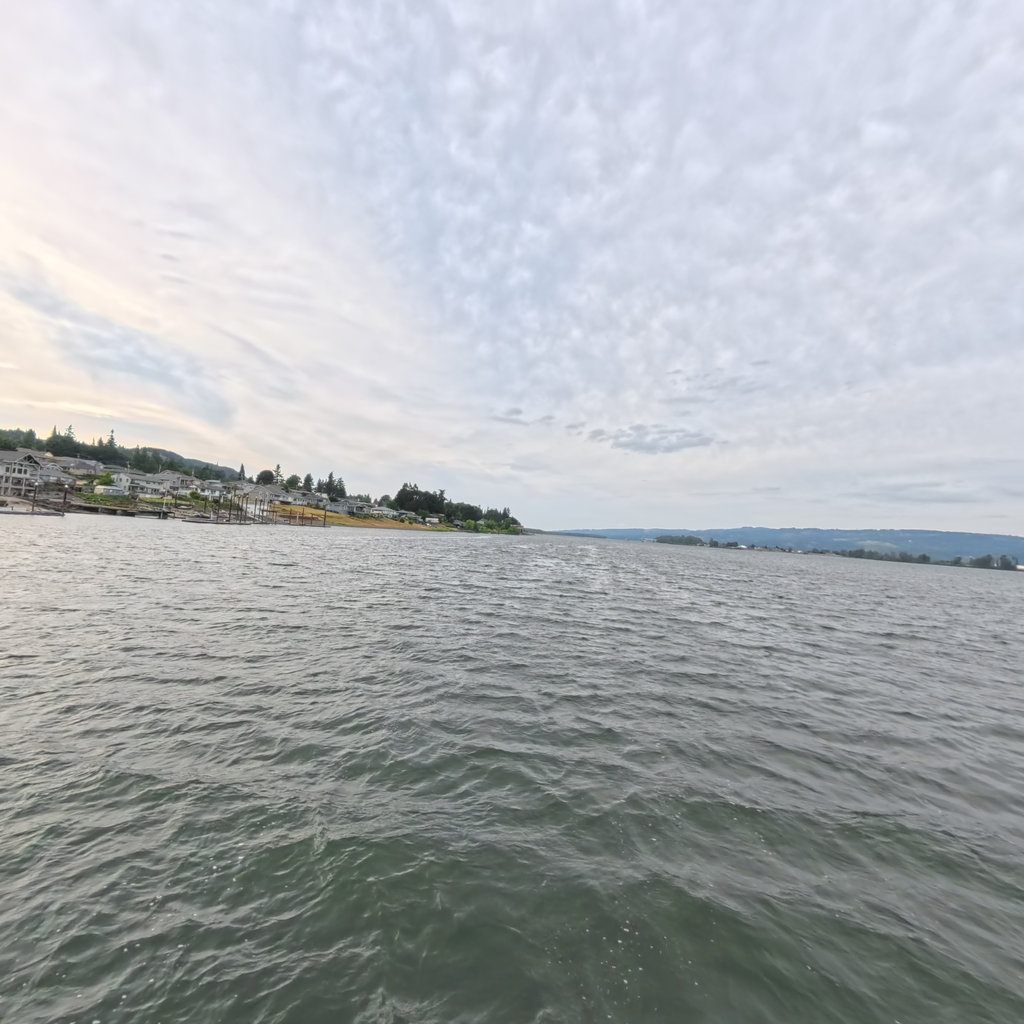
Lewis: April 1, 1806
Camped near the Quicksand (Sandy) River, the captains sent Sergeant Pryor up that river to explore it and dispatched hunters across and along the Columbia. Local Indians reported the Quicksand heads at Mount Hood, convincing the party that another major river must drain the southern valley. Visiting natives traveling downriver said food was scarce upstream and salmon would not arrive until early May. Fearing starvation and worried about retrieving horses left with the Chopunnish, the captains decided to push on quickly rather than wait for the salmon run. Hunters brought in four elk and two deer. Cloudy weather prevented observations.
Tuesday April 1st 1806. This morning early we dispatched Sergt. Pryar with
two men in a small canoe up quicksand river with orders to proceed as far
as he could and return this evening. we also sent a party of three hunters
over the river to hunt a large bottom of woodland and prarie above the
entrance of the Quicksand river; the ballance of the hunters we sent out
in different directions on this side of the Columbia and employed those
about camp in making a rope of Elkskin. the Indians who encamped near us
last evening continued with us untill about midday. they informed us that
the quicksand river which we have heretofore deemed so considerable, only
extendes through the Western mountains as far as the S. Western side of
mount hood where it takes it’s source. this mountain bears E from this
place and is distant about 40 miles. this information was corroborated by
that of sundry other indians who visited us in the course of the day. we
were now convinced that there must be some other considerable river which
flowed into the columbia on it’s south side below us which we have not yet
seen, as the extensive valley on that side of the river lying between the
mountainous country of the Coast and the Western mountains must be watered
by some stream which we had heretofore supposed was the quicksand river.
but if it be a fact that the quicksand river heads in Mount Hood it must
leave the valley within a few miles of it’s entrance and runs nearly
parallel with the Columbia river upwards. we indeavoured to ascertain by
what stream the southern portion of the Columbian valley was watered but
could obtain no satisfactory information of the natives on this head. they
informed us that the quicksand river is navigable a short distance only in
consequence of falls and rapids; and that no nation inhabits it.- Sergt.
Pryar returned in the evening and reported that he had ascended the river
six miles; that above the point at which it divides itself into two
channels it is about 300 yds wide tho the channel is not more than 50 yds
and only 6 ft deep. this is a large vollume of water to collect in so
short a distance; I therefore think it probable that there are some large
creeks falling into it from the S. W. the bed of this stream is formed
entirely of quicksand; it’s banks are low and at preasent overflows. the
water is turbid and current rapid.the following are the courses taken by
Sergt. Pryor. S. 10° W. 1 M. to a point on the Lard. side passing a large
Island on Stard. S. 24° E. 2 m. to the head of an Island near the Lard.
shore. S 33° E. 4 m. to a stard. point passing several islands on the
Lard. side and a creek 50 yds. wide on Stard at 11/2 miles. the river from
hence appeared to bend to the East. he heard falls of water. several
different tribes informed us that it heads at Mount Hood. We were visited
by several canoes of natives in the course of the day; most of whom were
decending the river with their women and children. they informed us that
they resided at the great rapids and that their relations at that place
were much streightened at that place for the want of food; that they had
consumed their winter store of dryed fish and that those of the present
season had not yet arrived. I could not learn wheather they took the
Sturgeon but presume if they do it is in but small quantities as they
complained much of the scarcity of food among them. they informed us that
the nations above them were in the same situation & that they did not
expect the Salmon to arrive untill the full of the next moon which happens
on the 2d of May. we did not doubt the varacity of these people who seemed
to be on their way with their families and effects in surch of subsistence
which they find it easy to procure in this fertile valley.This
information gave us much uneasiness with rispect to our future means of
subsistence. above falls or through the plains from thence to the
Chopunnish there are no deer Antelope nor Elk on which we can depend for
subsistence; their horses are very poor most probably at this season, and
if they have no fish their dogs must be in the same situation. under these
circumstances there seems to be but a gloomy prospect for subsistence on
any terms; we therefore took it into serious consideration what measures
we were to pursue on this occasion; it was at once deemed inexpedient to
wait the arrival of the salmon as that would detain us so large a portion
of the season that it is probable we should not reach the United States
before the ice would close the Missouri; or at all events would hazard our
horses which we lelft in charge of the Chopunnish who informed us that
they intended passing the rocky mountains to the Missouri as early as the
season would permit them wich is as we believe about the begining of May.
should these people leave their situation near kooskooske before our
arrival we may probably find much difficulty in recovering our horses;
without which there will be but little possibility of repassing the
mountains; we are therefore determined to loose as little time as possible
in geting to the Chopunnish Village. at 3 P.M. the hunters who were sent
over the river returned having killed 4 Elk and two deer; the Elk were in
good order but the deer extreemly poor. they informed us that game is very
plenty in that quarter. the hunters on this side of the river also
returned but had killed nothing; they saw a few Elk and deer. there was
also much sign of the black bear seen on the other side of the river. we
sent a party to bring in the flesh of the Elk and deer that were killed.
they did not return this evening. I purchased a canoe from an Indian today
for which I gave him six fathoms of wampum beads; he seemed satisfyed with
his bargain and departed in another canoe but shortly after returned and
canceled the bargain; took his canoe and returned the beads. this is
frequently the case in their method of traiding and is deemed fair by
them. The last evening and this morning were so cloudy that I could
neither obtain any Lunar observations nor equal altitudes.-
Read this entry in modern English AI-translated
Tuesday, April 1st, 1806. Early this morning we dispatched Sergt. Pryar (Sergeant Pryor) with two men in a small canoe up Quicksand River with orders to proceed as far as he could and return this evening. We also sent a party of three hunters over the river to hunt a large bottom of woodland and prairie above the entrance of the Quicksand River; the rest of the hunters we sent out in different directions on this side of the Columbia and employed those about camp in making a rope of elkskin. The Indians who camped near us last evening stayed with us until about midday. They informed us that the Quicksand River, which we have heretofore deemed so considerable, only extends through the western mountains as far as the southwestern side of Mount Hood, where it takes its source. This mountain bears east from this place and is distant about 40 miles. This information was corroborated by that of sundry other Indians who visited us in the course of the day.
We were now convinced that there must be some other considerable river which flows into the Columbia on its south side below us, which we have not yet seen, since the extensive valley on that side of the river lying between the mountainous country of the coast and the western mountains must be watered by some stream that we had heretofore supposed was the Quicksand River. But if it be a fact that the Quicksand River heads in Mount Hood, it must leave the valley within a few miles of its entrance and run nearly parallel with the Columbia River upwards. We endeavored to ascertain by what stream the southern portion of the Columbian valley was watered, but could obtain no satisfactory information from the natives on this point. They informed us that the Quicksand River is navigable only a short distance, on account of falls and rapids, and that no nation inhabits it.
Sergt. Pryar returned in the evening and reported that he had ascended the river six miles; that above the point where it divides itself into two channels it is about 300 yards wide, though the channel is not more than 50 yards wide and only 6 feet deep. This is a large volume of water to collect in so short a distance; I therefore think it probable that there are some large creeks falling into it from the southwest. The bed of this stream is formed entirely of quicksand; its banks are low and at present overflowed. The water is turbid and the current rapid. The following are the courses taken by Sergt. Pryor: S. 10° W. 1 mile to a point on the larboard side, passing a large island on starboard; S. 24° E. 2 miles to the head of an island near the larboard shore; S. 33° E. 4 miles to a starboard point, passing several islands on the larboard side and a creek 50 yards wide on starboard at 1½ miles. The river from there appeared to bend to the east. He heard falls of water. Several different tribes informed us that it heads at Mount Hood.
We were visited by several canoes of natives in the course of the day; most of whom were descending the river with their women and children. They informed us that they resided at the Great Rapids and that their relations at that place were much pinched there for want of food; that they had consumed their winter store of dried fish and that those of the present season had not yet arrived. I could not learn whether they took the sturgeon, but presume if they do it is only in small quantities, as they complained much of the scarcity of food among them. They informed us that the nations above them were in the same situation, and that they did not expect the salmon to arrive until the full of the next moon, which happens on the 2nd of May. We did not doubt the veracity of these people, who seemed to be on their way with their families and effects in search of subsistence, which they find it easy to procure in this fertile valley.
This information gave us much uneasiness with respect to our future means of subsistence. Above the falls, or through the plains from there to the Chopunnish, there are no deer, antelope, nor elk on which we can depend for subsistence; their horses are very poor most probably at this season, and if they have no fish, their dogs must be in the same situation. Under these circumstances there seems to be but a gloomy prospect for subsistence on any terms. We therefore took it into serious consideration what measures we were to pursue on this occasion. It was at once deemed inexpedient to wait the arrival of the salmon, as that would detain us so large a portion of the season that it is probable we should not reach the United States before the ice would close the Missouri; or at all events would hazard our horses, which we left in charge of the Chopunnish, who informed us that they intended passing the Rocky Mountains to the Missouri as early as the season would permit them, which is, as we believe, about the beginning of May. Should these people leave their situation near Kooskooske before our arrival, we may probably find much difficulty in recovering our horses; without which there will be but little possibility of repassing the mountains. We are therefore determined to lose as little time as possible in getting to the Chopunnish village.
At 3 P.M. the hunters who were sent over the river returned, having killed 4 elk and two deer; the elk were in good order but the deer extremely poor. They informed us that game is very plentiful in that quarter. The hunters on this side of the river also returned, but had killed nothing; they saw a few elk and deer. There was also much sign of the black bear seen on the other side of the river. We sent a party to bring in the flesh of the elk and deer that were killed. They did not return this evening. I purchased a canoe from an Indian today, for which I gave him six fathoms of wampum beads; he seemed satisfied with his bargain and departed in another canoe, but shortly after returned and canceled the bargain, took his canoe, and returned the beads. This is frequently the case in their method of trading and is deemed fair by them. Last evening and this morning were so cloudy that I could neither obtain any lunar observations nor equal altitudes.
This modernization is AI-generated for accessibility. The original above is the authoritative version.
Entities mentioned in this entry
Auto-extracted from the entry text. Hover any entity for context.