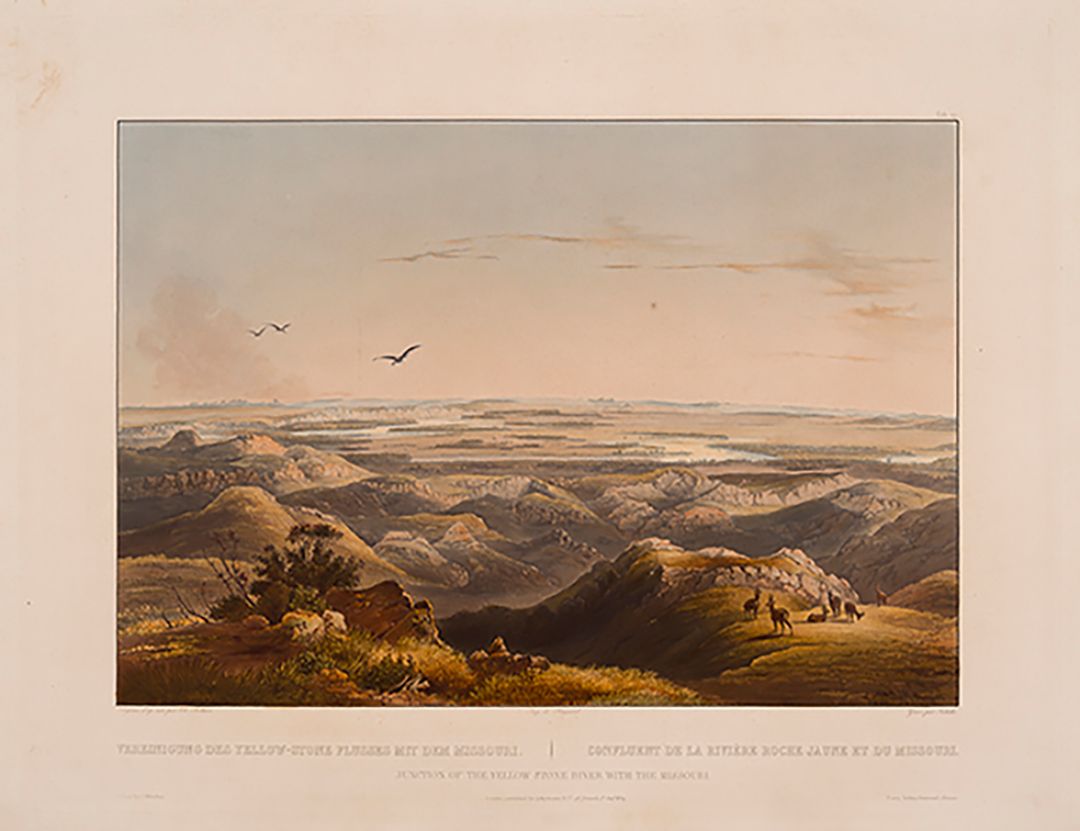
Junction of the Yellowstone River with the Missouri
Bodmer’s aquatint shows the broad flat confluence where the Yellowstone River empties into the Missouri in what is now western North Dakota, near the Montana border. The composition is dominated by sky and water, with low wooded banks framing the meeting of the two rivers. In the foreground, a small group of figures—likely Native travelers or members of Prince Maximilian’s party—occupies the riverbank, providing scale against the open landscape. Bodmer worked from watercolor field studies, which were later translated into hand-colored aquatint engravings by European printmakers under his close supervision. The technique allowed him to render the pale washed light of the upper Missouri and the subtle gradations of distance across the floodplain.
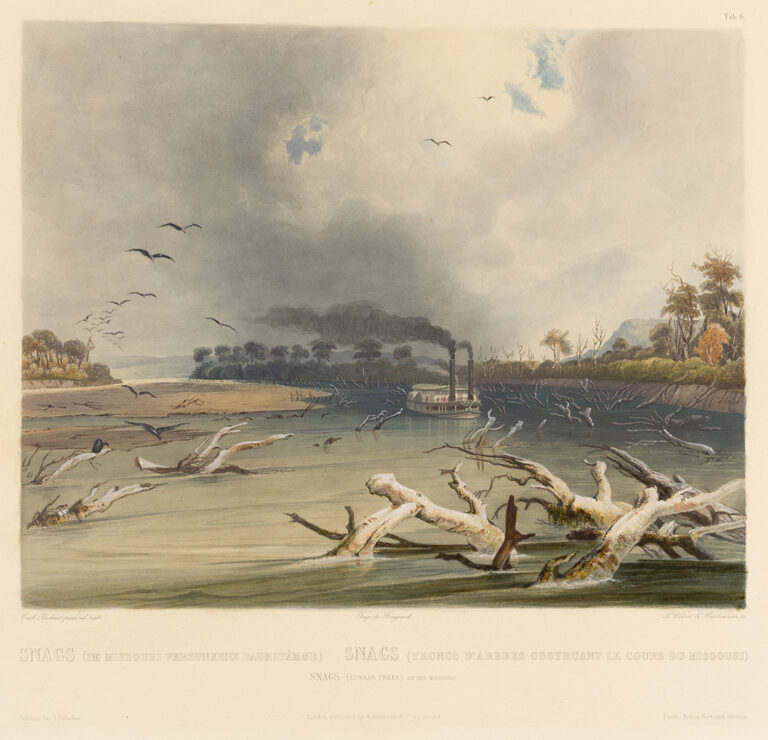
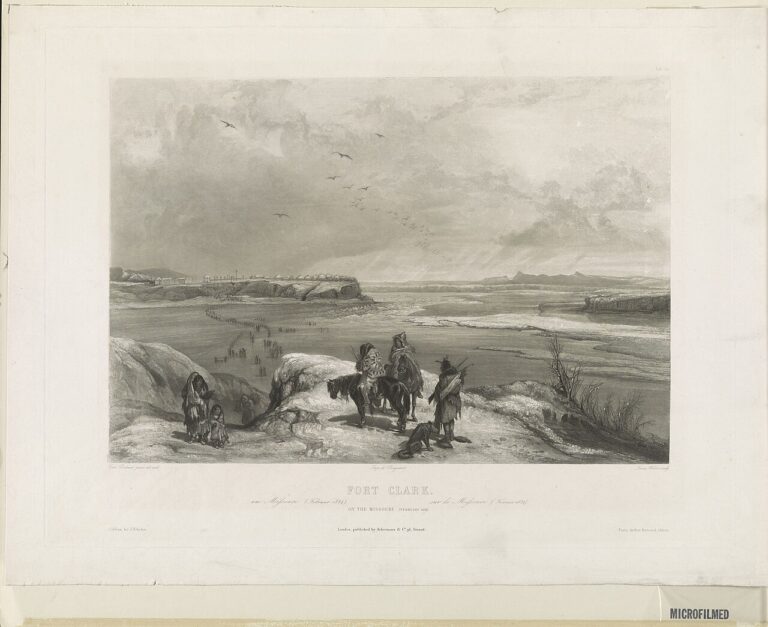
The image dates from Bodmer’s 1833 travels with Prince Maximilian zu Wied-Neuwied on the American Fur Company steamboat Yellow Stone and its successor Assiniboine. The party reached the Yellowstone–Missouri confluence in June 1833, near Fort Union, which had been established by Kenneth McKenzie in 1828 as the principal trading post of the upper river. The site carried significance for American audiences because Lewis and Clark had camped there in late April 1805 on their outbound journey, and Clark returned to it in August 1806 on his way downriver. By the time Bodmer arrived, the confluence had become a fixed node of the fur trade, and his view documents the country roughly a generation after the Corps of Discovery passed through.
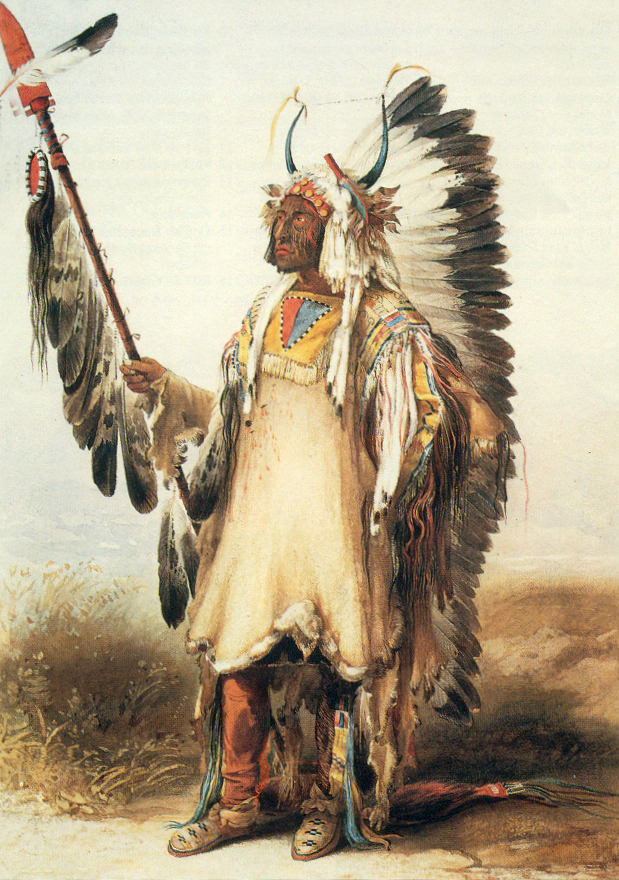
Karl Bodmer (1809–1893), a Swiss-born painter trained in the topographical tradition, was hired by Maximilian specifically to produce a visual record of the expedition. The plates from the journey were published in the atlas accompanying Maximilian’s Reise in das innere Nord-America (1839–1843) and remain the most detailed visual ethnographic record of the upper Missouri before the smallpox epidemic of 1837. Bodmer afterward settled in France and turned to Barbizon landscape and animal subjects, largely abandoning American imagery. The Joslyn Art Museum in Omaha holds the Maximilian-Bodmer Collection, including the original watercolors and a set of the aquatints, and has been the principal institution shaping modern scholarly use of Bodmer’s work in Lewis and Clark and upper Missouri studies.
Scene Location
Confluence of Yellowstone and Missouri Rivers, North Dakota