Clark: February 14, 1806
Friday February 14th 1806 We are very uneasy with respect to our Sick men
at the Salt works. Serjt. Pryor and party haveing not yet returneded, nor
can we conceive what can be the Cause of their delay. Drewyer visited his
traps & to day and Cought a fine fat beaver on which we feasted this
evening and thought it a great delecessey.-.
I compleated a map of the Countrey through which we have been passing from
the Mississippi at the Mouth of Missouri to this place. In the Map the
Missouri Jefferson’s river the S. E. branch of the Columbia or Lewis’s
river, Koos-koos-ke and Columbia from the enterance of the S. E fork to
the pacific Ocian, as well as a part of Clark’s river and our track across
the Rocky Mountains are laid down by celestial observations and Survey.
the rivers are also conected at their Sources with other rivers agreeably
to the information of the nativs and the most probable conjecture arrising
from their capacities and the relative positions of their respective
enterances which last have with but fiew exceptions been established by
celestial observations. We now discover that we have found the most
practicable and navigable passage across the Continent of North America;
it is that which we have traveled with the exception of that part of our
rout from the foot of the Falls of the Missouri, or in neighbourhood of
the enterance of the Rocky Mountains untill we arive on Clarks river at
the enterence of Travelers-rest Creek; the distance between those two
points would be traveled more advantagiously by land as the navigation of
the Missouri above the Falls is crooked laborious and 521 miles distant by
which no advantage is gained as the rout which we are compelled to travel
by land from the Source of Jeffersons River to the enterance of Travellers
rest Creek is 220 miles being further by At. 600 miles than that from the
Falls of the Missourie to the last mentioned point (Travellers rest Creek)
and a much worse rout if indian information is to be relied on which is
from the So so nee or Snake Indians, and the Flatheads of the Columbia
west of the rocky mountains. from the Same information Clarks river like
that of the S. E. branch of the Columbia which heads with Jefferson’s and
Maddisons river’s can not be navagated thro the rocky mountains in
consequence of falls and rapids, and as a confirmation of the fact we
discovered that there were no Salmon in Clark’s river, which is not the
Case in the S. E. branch of the Columbia altho it is not navagable. added
to this, the Indians of different quartes further inform us, that Clark’s
river runs in the direction of the Rocky Mountains for a great distance to
the north before it discharges itself into the Columbia river-from
the Same information the Columbia from the enterance of the S. E. branch
to the enterance of Clark’s river is obstructed with a great number of
dificuelt and dangerous rapids (and the place Clark’s river comes out of
the Rocky mountains is a tremendious falls &c which there is no
possibillity of passing the mountains either by land or water.)
Considering therefore the dangers and deficuelties attending the
navigation of the Columbia in this part, as well as the circuitous and
distant rout formed by itself and that of Clark’s River we Conceive that
even admitting that Clarks river contrary to information to be as
navagable as the Columbia below it’s enterance, that the tract by land
over the Rocky Mountains usially traveled by the nativs from the enterance
of Travellers rest Creek to the Forks of the Kooskooske is preferable; the
Same being a distance of 184 miles. The inferrence therefore deduced from
these premises are, that the best and most practicable rout across the
Continent is by way of the Missouri to the Great Falls; thence to Clarks
river at the enterance of Travellers rest Creek, from thence up travillers
rest Creek to the forks, from whence you prosue a range of mountains which
divides the waters of the two forks of this Creek, and which still
Continues it’s westwardly Course on the mountains which divides the waters
of the two forks of the Kooskooske river to their junction; from thence to
decend this river to the S. E. branch of the Columbia, thence down that
river to the Columbia, and down the Latter to the Pacific Ocian-. There is
a large river which falls into the Columbia on its South Side at what
point we could not lern; which passes thro those extencive Columbian
Plains from the South East, and as the Indians inform us head in the
mountains South of the head of Jeffersons River and at no great distance
from the Spanish Settlements, and that that fork which heads with the
River Rajhone and waters of the Missouri passes through those extensive
plains in which there is no wood, and the river Crowded with rapids &
falls many of which are impassable. the other or westerly fork passes near
a range of mountains and is the fork which great numbers of Indian Bands
of the So sone or Snake Indians, this fork most probably heads with North
River or the waters of Callifornia. This River may afford a practicable
land Communication with New Mexico by means of its western fork. This
river cannot be navagable as an unpracticable rapid is within one mile of
its enterance into the Columbia, and we are fully purswaded that a rout by
this river if practicable at all, would lengthen the distance greatly and
incounter the Same dificuelties in passing the Rocky Mountains with the
rout by way of Travellers rest Creek & Clarks river.
Entities mentioned in this entry
Auto-extracted from the entry text. Hover any entity for context.
Terrain360 · the place today
Fort Clatsop, winter quarters in 360°
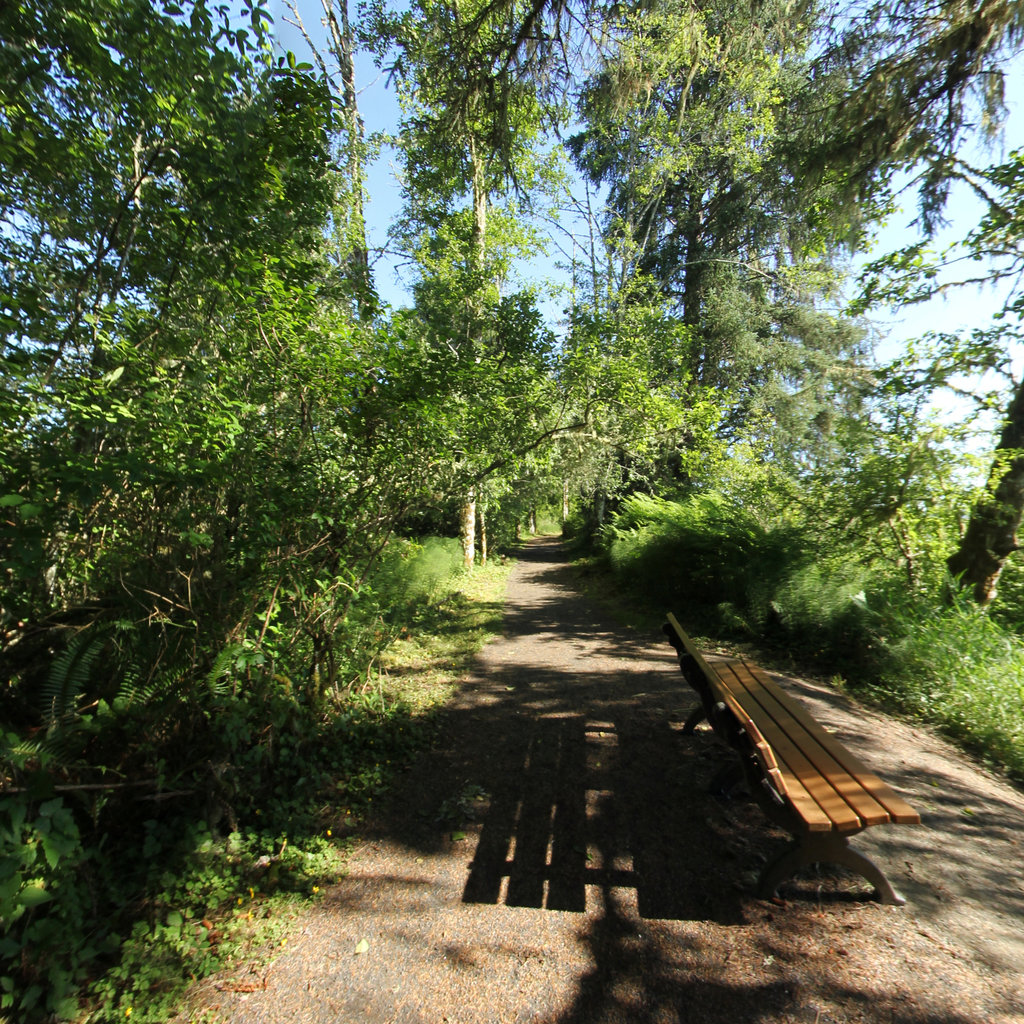
10 frames across 0.8 mi of the route around this location
Analyses
- Mapping the Continent: Clark’s Cartographic Breakthrough at Fort Clatsop
- Thomas Jefferson: The Distant Architect of the Voyage of Discovery
- The Flathead Salish: Allies in the Bitterroot
- The Shoshone Nation: Sacagawea’s People and the Horse Trade
- Sergeant Nathaniel Pryor: A Steady Hand of the Corps of Discovery
Artwork
Help improve this record
See something that needs correcting, or know a source we are missing? The archive gets better through its readers.


