Clark: April 5, 1806
Cloudy weather prevented lunar observations. Joseph Field and Drouillard departed on assignment, while Sergeant Ordway and five men helped Sergeant Pryor retrieve four elk Pryor had dried in the woods. The meat arrived insufficiently dried, so it was re-dried over the fire, along with deer skins meant to hold it, in preparation for an early departure the next morning. Sergeant Gass returned with Collins and Windsor, having failed to kill a female bear but bringing three cubs, which visiting natives traded wappato for. Clark recorded extensive notes on local plants, wildlife, and terrain.
Saturday April 5th 1806. This morning was So Cloudy that we could not
obtain any lunar observations with a Aquila as we wished.
Joseph Field & Drewrey left us this morning agreeably to their orders
of last evening. at the Same time we Sent Sergt. Ordway and five men to
assist Sergt. Pryor in bringing in the meat of four Elk which he had dried
in the woods. at 1 p.m.the party returned with the meat. it was not
Sufficiently dryed to keep. we had it cut thiner and redryed over a fire
this evening, as we purpose Setting out early in the morning. the dear
skins which we had cased for the purpose of holding our dried meat is not
Sufficently dry for that purpose, we derected them to be dried by the fire
also. the weather being So damp that there was no possibullity of pounding
the meat as I wished.We were visited by Several parties of the
nativs to day; they behaved themselves in a very orderly manner.
Saw the Log cock, the humming bird, Geese, Ducks &c. to day. the tick
has made it’s appearance it is the Same with those of the Atlantic States.
the Musquetors have also appeared, but are not yet much troublesom.this
morning at 10 A M Sergt. Gass returned with Collins and Windser they had
not Succeeded in killing the female bear, tho they brought the three cub’s
with them. the Indians who visited us to day fancied those Petts and gave
us wappato in exchange for them. Fir and White Cedar is the common growth
of the up lands, as is the Cotton wood, ash, large leafed Ash and Sweet
Willow that of the bottom lands. The Huckleberry, shallon, and the Several
evergreen Shrubs, of that Speces that bears berries have Seased to appear,
except that Species which has the leaf with a prickley Margin. among the
plants of this prarie in which we are encamped I observe the pashequo,
Shannetahque, and Compound firn, the root of which the nativs eate; also
the water cress, Straw berry flowering pea not yet in blume, narrow dock,
and rush which are luxuriant and abundent in the river bottoms. the large
leafed thorn has also disappeard. The red flowering Current is found here
in considerable quantities on the upland, and the Common Dog wood is found
on either Side of the river in this neighbourhood and above Multnomah
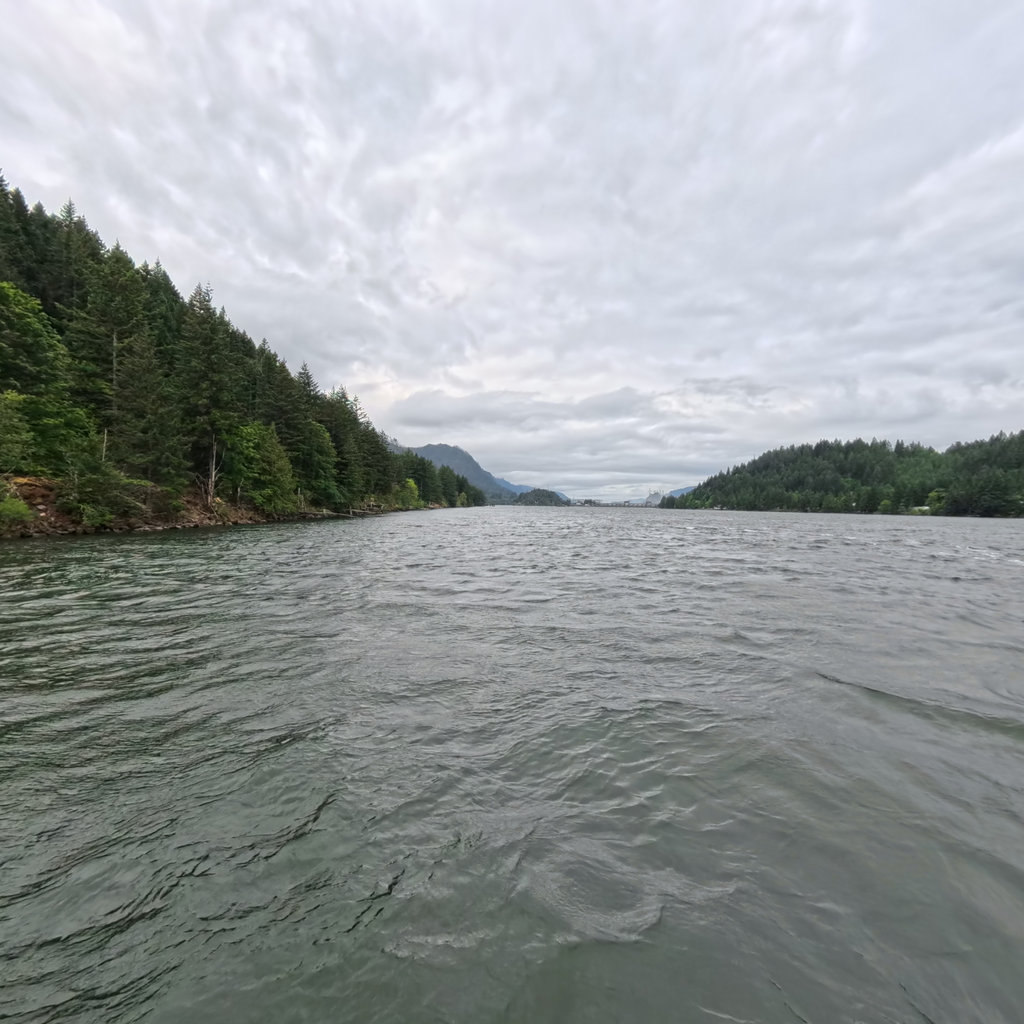
river. The Country on either Side is fertile, the bottom on the South Side
is wide and inter sperced with Small ponds in which the nativs gather
their Wappato. back of this bottom the Country rises to about 200 feet and
the Soil is very rich as that also above q Sandy river quite to the
Mountains. the Country on the N. Side from a fiew Miles above this place
as low down as the enterance of Cah-wah-na-ki-ooks River rises to the
hight generally of 150 or 200 feet is tolerably leavel, thickly timbered
with Fir and White Cedar. the Soil of the richest quallity. Some Small
Praries on the bank of the river. That portion of Country below as low
down as the enterance of Cah-wah na ki ooks River is a broken rich
Country. the hills are high, the bottom lands as before mentioned and
fertile &c.-The Country a fiew miles up the Multnomah River rises from
the river bottoms to the hight of from 2 to 300 feet and is rich &
fertile. Some Plains can be Seen to the N. E. of our Camp of 10 or 12
miles in Secumference The Hunters & Serjt Pryor informed us that they
had Measured a tree on the upper Side of quick Sand River 312 feet long
and about 4 feet through at the Stump.
Read this entry in modern English AI-translated
Saturday April 5th 1806. This morning was so cloudy that we could not obtain any lunar observations with Aquila as we wished.
Joseph Field and Drewrey (Drewyer) left us this morning according to their orders from last evening. At the same time we sent Sergt. Ordway and five men to assist Sergt. Pryor in bringing in the meat of four elk which he had dried in the woods. At 1 p.m. the party returned with the meat. It was not sufficiently dried to keep. We had it cut thinner and redried over a fire this evening, as we plan to set out early in the morning. The deer skins which we had cased for the purpose of holding our dried meat are not sufficiently dry for that purpose, so we directed them to be dried by the fire also. The weather was so damp that there was no possibility of pounding the meat as I wished. We were visited by several parties of the natives today; they behaved themselves in a very orderly manner.
Saw the log cock, the humming bird, geese, ducks, etc. today. The tick has made its appearance; it is the same as those of the Atlantic States. The mosquitoes have also appeared, but are not yet much troublesome. This morning at 10 A.M. Sergt. Gass returned with Collins and Windser (Windsor); they had not succeeded in killing the female bear, though they brought the three cubs with them. The Indians who visited us today fancied these pets and gave us wappato in exchange for them. Fir and white cedar are the common growth of the uplands, as are the cottonwood, ash, large-leafed ash, and sweet willow of the bottom lands. The huckleberry, shallon, and the several evergreen shrubs of that species that bears berries have ceased to appear, except that species which has the leaf with a prickly margin. Among the plants of this prairie in which we are camped I observe the pashequo, shannetahque, and compound fern, the root of which the natives eat; also the water cress, strawberry, flowering pea (not yet in bloom), narrow dock, and rush, which are luxuriant and abundant in the river bottoms. The large-leafed thorn has also disappeared. The red flowering currant is found here in considerable quantities on the upland, and the common dogwood is found on either side of the river in this neighborhood and above Multnomah River.
The country on either side is fertile; the bottom on the south side is wide and interspersed with small ponds in which the natives gather their wappato. Back of this bottom the country rises to about 200 feet and the soil is very rich, as is also that above Quicksand River quite to the mountains. The country on the north side, from a few miles above this place as low down as the entrance of Cah-wah-na-ki-ooks River, rises to the height generally of 150 or 200 feet, is tolerably level, and is thickly timbered with fir and white cedar. The soil is of the richest quality. Some small prairies lie on the bank of the river. That portion of country below, as low down as the entrance of Cah-wah-na-ki-ooks River, is a broken, rich country. The hills are high, the bottom lands as before mentioned and fertile, etc. The country a few miles up the Multnomah River rises from the river bottoms to the height of from 200 to 300 feet and is rich and fertile. Some plains can be seen to the N.E. of our camp, of 10 or 12 miles in circumference. The hunters and Sergt. Pryor informed us that they had measured a tree on the upper side of Quicksand River 312 feet long and about 4 feet through at the stump.
This modernization is AI-generated for accessibility. The original above is the authoritative version.
Entities mentioned in this entry
Auto-extracted from the entry text. Hover any entity for context.