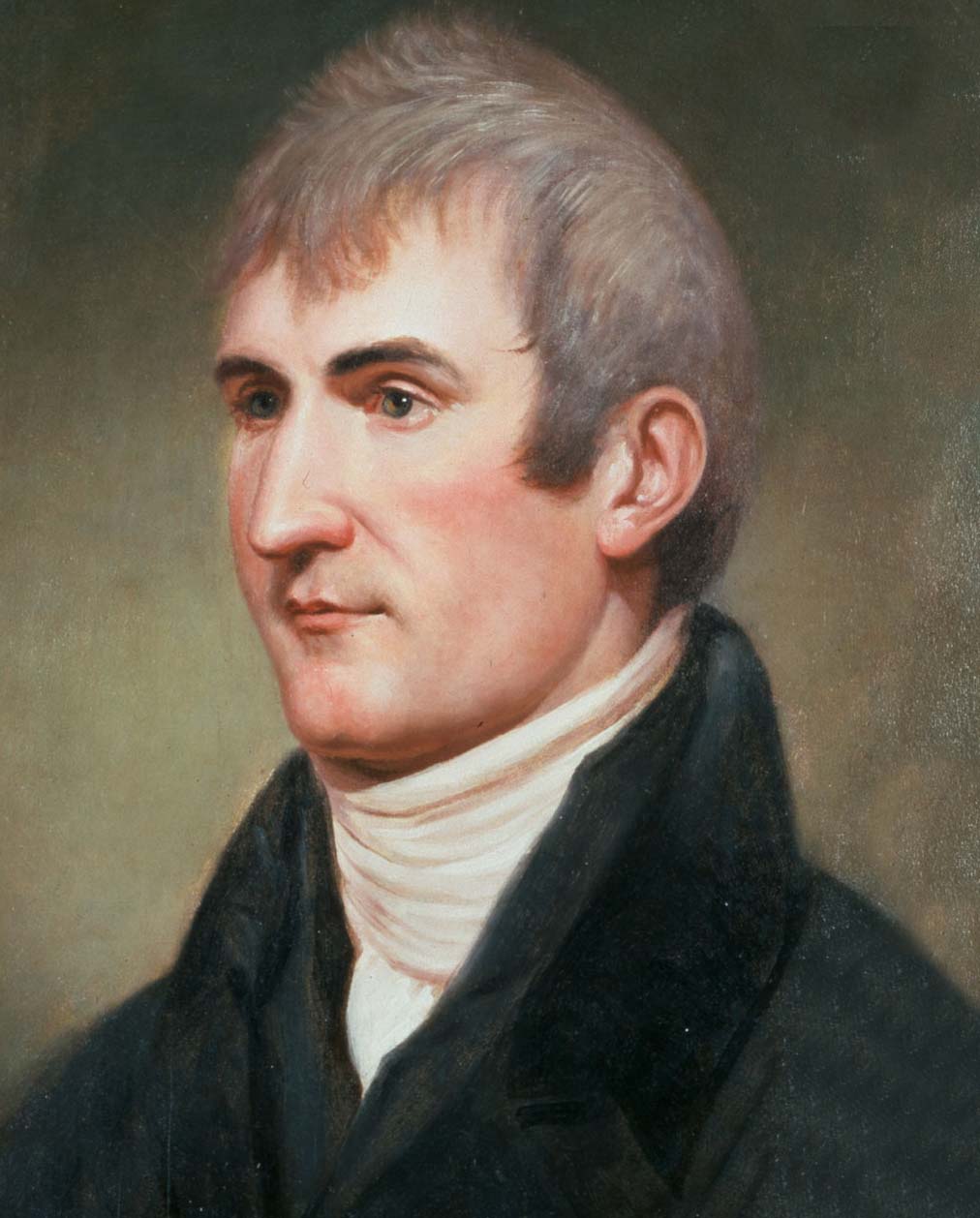

Introduction
George Shannon was, at roughly eighteen years of age, the youngest enlisted member of the permanent party of the Corps of Discovery. He appears in the journals from the Detachment Order organizing the messes in May 1804 through the final months of the return journey in 1806. Across that span he is at turns lost, hungry, relied on as a hunter, and sent as a diplomatic emissary. The journals provide a remarkably full record of his maturation under Lewis and Clark’s command.
Assignment to Sergeant Pryor’s Mess
Shannon enters the journal record formally in Lewis’s Detachment Orders of May 26th, 1804, which assigned him as the twentieth man on the roster, in the squad commanded by Sergeant Nathaniel Pryor:
18 Sergt. Nathaniel Pryor.
Privates.
19 George Gibson
20 George Shannon
21 John Shields
22 John Collins
23 Joseph Whitehouse
24 Peter Wiser …
From this organizational moment forward, Shannon’s name recurs throughout the captains’ entries — usually in the context of hunting, herding horses, or being missing.
Lost on the Prairie, August–September 1804
The most famous Shannon episode of the outbound journey is his prolonged disappearance on the upper Missouri. Clark first notes his absence on August 23rd, 1804:
Set out this morning verry early, the two men R. Fields & Shannon did not Come up last night.
A few days later, on August 26th, Clark records that the captains were proceeding upriver “leaveing G. Drewyer & Shannon to hunt the horses.” Shannon, with a horse and few bullets, mistakenly believed the keelboat was ahead of him and pushed upstream alone.
By September 2nd, Clark notes laconically:
Shannon & the man Sent after him has not yet joind us.
The young man’s reappearance on September 11th, 1804 is one of the more affecting entries in Clark’s field notes:
The man G Shannon, who left us with the horses above the Mahar Village, and beleving us to be ahead pushed on as long as he Could, joined us he Shot away what fiew Bullets he had with him, and in a plentiful) Countrey like to have Starvd. he was 12 days without provision, Subsisting on Grapes at the Same the Buffalow, would Come within 30 yards of his Camp, one of his horses gave out & he left him before his last belluts were ConsumedI saw 3 large Spoted foxes today.
The episode left a literal mark on the country: at the mouth of a creek on the L.S., Clark wrote on September 15th, 1804, that this was the place “where Shannon lived on grapes waiting for Mr. Clintens boat Supposeing we had went on.” The young hunter had nearly perished in the midst of plenty, an irony the captains apparently never forgot.
Fort Mandan and the Upper Missouri, 1805
At Fort Mandan, Shannon was an ordinary working hand. Clark notes on March 6th, 1805:
one man Shannon Cut his foot with the ads in working at a perogue.
Through the spring and summer of 1805 Shannon is repeatedly attached to small hunting parties. Lewis, on June 19th, 1805, wrote:
I also dispatched George Drewyer Reubin Fields and George Shannon on the North side of the Missouri with orders to proceed to the entrance of Medecine river and indeavour to kill some Elk in that neigh-bourhood.
A Second Disappearance on the Jefferson
In August 1805, on the upper Jefferson, Shannon again became separated from the main party. Lewis dispatched Reubin Fields in search of him on August 7th, 1806 [1805]: “Dispatched Reubin Fields in surch of Shannon.” Two days later, on August 9th, 1805, Lewis recorded the lad’s reappearance and his independent reasoning:
while we halted here Shannon arrived, and informed us that having missed the party the day on which he set out he had returned the next morning to the place from whence he had set out or furst left them and not finding that he had supposed that they wer above him; that he then set out and marched one day up wisdom river, by which time he was convinced that they were not above him as the river could not be navigated; he then returned to the forks and had pursued us up this river. he brought the skins of three deer which he had kil[led]
This second separation was shorter than the first and Shannon now showed greater woodcraft, deducing his error and retracing his steps.
The Pacific Coast: Hunter for Fort Clatsop
By the winter of 1805–06, Shannon was one of the captains’ most-relied-upon hunters. He was one of five men accompanying Lewis on the canoe reconnaissance of November 29th, 1805 to find a winter camp:
I determined therefore to proceed down the river on it’s E. side in surch of an eligible place for our winters residence and accordingly set out early this morning in the small canoe accompanyed by 5 men. drewyer R. Fields, Shannon, Colter & labiesh.
Through the wet Clatsop winter, Shannon’s name appears in nearly every successful elk hunt. Clark wrote on December 13th, 1805:
Drewyer & Shannon returned from hunting havg. killed 18 Elk and butchered all except 2 which they Could not get as night provented ther finding them & they Spoild.
Lewis sent him with Sergeant Gass to relieve the saltmakers on January 3rd, 1806, and again on January 10th Clark expected to find “Shannon and gibson with meet to furnish the Salt makers.” On January 19th, Lewis sent “Labuish and Shannon” up the Netul by water; on January 21st they returned “having killed three Elk”; on January 27th Lewis records:
in the evening Shannon returned and reported that himself and party had killed ten Elk.
Shannon’s dependability extended even to ornithology in service. On February 17th, 1806 Lewis noted:
Shannon brought me one of the large carrion Crow or Buzzads of the Columbia which they had wounded and taken alive. I bleive this to be the largest bird of North America.
The specimen — a California condor — was one of the expedition’s most consequential natural history records.
The Return: Trader, Diplomat, Guide-Seeker
On the return up the Columbia, Shannon’s role expanded. Lewis sent him on April 4th, 1806 with Gibson, Howard, and Wiser ahead in a light canoe to hunt. He was with Clark’s portage party at the falls of the Columbia on April 19th, 1806:
I then took Sgt. Pryor, G. Shannon & Crusat & Labiech and went up to the falls.
Among the Nez Perce in May and early June 1806, Shannon was a steady member of the hunting and trading parties. Lewis recorded on May 30th, 1806 that “Shannon and Collins were permitted to pass the river in order to trade with the natives,” but their canoe was “driven broad side with the full forse of a very strong current against some standing trees and instantly filled with water and sunk” — costing them three blankets and a coat in a season when clothing was already scarce.
Most consequential, however, was the diplomatic mission Lewis assigned him on June 18th, 1806:
We dispatched Drewyer and Shannon to the Chopunnish Indians in the plains beyond the Kooskooske in order to hasten the arrival of the indians who had promised to accompany us or to procure a gude at all events and rejoin us as soon as possible.
The captains entrusted Shannon with a rifle to be offered as a reward to any guide who would conduct them to Traveller’s Rest. After several days of waiting and a forced retreat to the quamash flats, Lewis recorded the mission’s success on June 23rd, 1806:
at 4 P.M. Drewyer Shannon and Whitehouse returned. Drewyer brought with him three indians who had consented to accompany us to the falls of the Missouri for the compensation of two guns.
The guides Shannon helped recruit made the recrossing of the Bitterroots possible.
Character in the Record
The journal record of Shannon’s three years is heavily concentrated on practical work — hunting elk, trading roots, herding horses, ferrying salt — but it is bracketed by two near-disasters of inexperience: the August 1804 starvation episode and the August 1805 separation on the Jefferson. Between them lies the steady accumulation of competence. By the winter at Fort Clatsop he is named almost interchangeably with the most accomplished woodsmen of the party — Drewyer, Labuish, Reubin Fields, Colter — and by the spring of 1806 he is being sent on independent diplomatic errands. The journals do not editorialize about Shannon’s growth, but the trajectory of his assignments speaks for itself.
Sources and Limits
This synthesis draws only from journal entries in which Shannon is named or unambiguously implied. The captains say little about his personality, his speech, or his life before or after the expedition. Readers seeking biographical detail beyond the journey itself will not find it in the journals; what the journals do preserve is a remarkably detailed operational portrait of the youngest soldier in the Corps and his transformation in the field.


